Field guide / 04 / Botanical attention
Botanical wonders: Rarity beyond the record book
A plant does not need to be enormous to change how we see a forest. Sometimes its significance lies in a difficult life cycle, a tiny range or the care required to keep it alive.
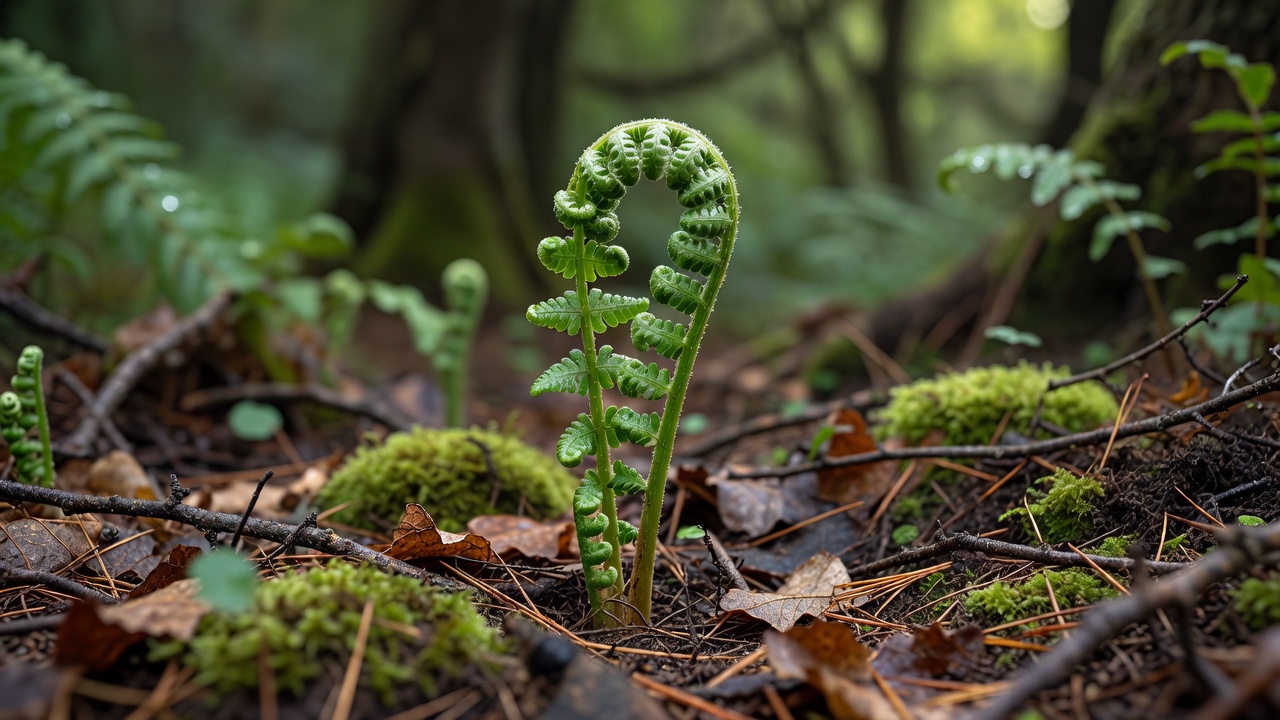
Discovery is a process, not just a moment
On a guided walk, a small plant can seem like a private revelation. Scientific discovery involves more than noticing it: researchers compare specimens, examine existing collections, consult descriptions and evaluate relationships. A plant newly described by science may have been known to local or Indigenous communities for generations. “New to science” should never be carelessly rewritten as “never seen by anyone.”
Names also change as evidence improves. A familiar garden label may preserve an older classification, while a current botanical database uses another accepted name. Keeping track of synonyms helps connect research, conservation records and field observations. It is not evidence that the plant itself has suddenly changed.
Wollemi pine: an ancient lineage in the present
The Wollemi pine, Wollemia nobilis, became known to science after David Noble encountered an unusual tree in an Australian gorge in 1994. It belongs to the Araucariaceae, a conifer family with a deep evolutionary history. The discovery attracted attention because living trees could be compared with a long fossil record of related forms.
The phrase “living fossil” can be memorable, but it is easy to misunderstand. Living species continue to evolve; a lineage’s antiquity is not the age of a particular trunk. Nor does resemblance to fossil material mean that nothing has changed over millions of years. The present-day trees are living populations facing present-day threats.
Wild sites are sensitive, and precise locations are protected. Disease, fire and disturbance can threaten a species concentrated in a small area. Cultivated Wollemi pines in public gardens provide a responsible way to encounter the plant without adding pressure to wild populations. Ex situ collections can support conservation, but they do not replace the ecosystems that sustain plants in the wild.
Rafflesia: a flower dependent on another plant
Species of Rafflesia produce some of the most extraordinary flowers in tropical forests of Southeast Asia. These are parasitic flowering plants associated with host vines in the genus Tetrastigma. Much of their life is hidden within host tissues. A conspicuous flower is therefore only a brief, visible stage of a relationship that is usually difficult to observe.
Large-flower claims need careful wording. A single flower and a large inflorescence are not the same structure: an inflorescence is a cluster of flowers. The titan arum, Amorphophallus titanum, is famous for a huge flowering structure, but it should not be casually substituted for the largest individual flower. Record comparisons become clearer when their units are biological, not just numerical.
Protecting a Rafflesia population means protecting host plants, habitat and the conditions required for reproduction. Removing a flower for a closer look destroys the very event a visitor came to appreciate. Use authorised guides and established routes, and accept that flowering cannot always be promised.
Ghost orchids and the limits of a photograph
The ghost orchid, Dendrophylax lindenii, is associated with humid forest habitats in Florida and Cuba. Its leafless appearance draws attention to green roots that carry out photosynthesis. Like other orchids, its life cycle also involves relationships with fungi, particularly during early development.
A striking photograph can conceal how vulnerable a plant is to collection, habitat change or repeated close approach. Identifying it from one image may also be difficult. A responsible observation records visible features without handling the plant, damaging its support or publishing sensitive coordinates. For threatened plants, location privacy can be a practical conservation measure rather than an obstacle to curiosity.
Rarity has more than one dimension
A species may occupy a small geographic range, depend on a narrow habitat, or occur at low population density. These patterns have different implications. A locally abundant plant confined to one valley can still be vulnerable to a single severe event. A widespread plant may be declining even when a walker still encounters it regularly.
The IUCN Red List evaluates extinction risk using defined criteria; it is not simply a ranking of visual rarity. Assessments have dates, geographic scope and supporting evidence. Read those details before repeating a status. Lack of an assessment is not proof that a species is secure.
For a useful beginner’s record, note the date, broad habitat, visible features and a non-sensitive location. Photograph from the route and leave specimens untouched. Never taste an unfamiliar plant or use this site as a foraging guide. The best botanical discovery ends with the living plant still in place and a better question ready to ask.