Field guide / 02 / Living architecture
Giant trees: The architecture of great size
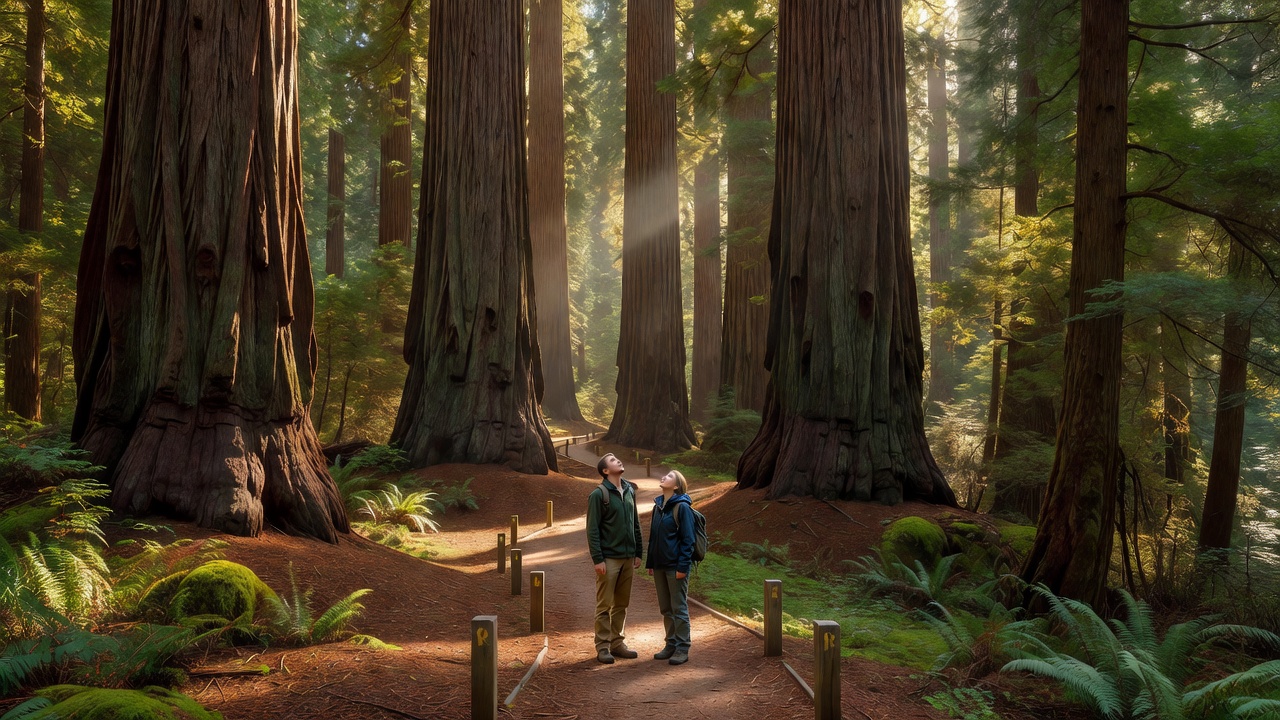
Stand on an official trail beside a great trunk. Your body supplies the first scale; careful measurement and ecology supply the rest.
Begin by asking what “biggest” means
A tree can dominate a photograph without holding any record. Height describes vertical reach. Circumference describes the distance around a trunk at a specified point. Trunk volume estimates three-dimensional bulk. These measures reward different architectures, and all require clear methods. A buttressed base, a leaning trunk or several fused stems can make casual comparisons misleading.
Surveyors use instruments such as laser rangefinders, clinometers and, in some cases, direct climbing measurements. The highest visible branch is not always the true top. A slope complicates the choice of ground level. Published figures can also become outdated when a tree grows, loses its crown or is measured more accurately. Treat a record as a documented observation, not an eternal title.
General Sherman, a giant sequoia in California’s Sequoia National Park, is described by the National Park Service as the largest living tree by trunk volume. That carefully qualified description matters. It does not mean the tallest tree, the widest tree under every measurement convention, or the greatest total organism by every possible definition.
Coast redwood: height in a moist coastal world
Coast redwood, Sequoia sempervirens, grows naturally in a narrow part of the Pacific coast of North America. Some individuals exceed 100 metres in height. Cool, moist conditions, productive soils and access to water help support this extraordinary vertical growth. Fog can reduce water stress, and fog water can enter the forest through several pathways.
Moving water to a high canopy becomes increasingly difficult as height increases. The tree must maintain water transport through its tissues while leaves exchange gases with the atmosphere. Wind exposure and mechanical stresses also shape its limits. A giant is not simply a small tree enlarged without consequence; its upper branches occupy a very different environment from its shaded base.
Redwoods can sprout from existing tissues after damage, contributing to complex forms and persistence. Their forests also contain ferns, shrubs, fungi, fallen logs and animals that depend on humid conditions. Protecting a spectacular tree while degrading the surrounding watershed misses much of the system that supports it.
Giant sequoia: bulk, bark and regeneration
Giant sequoia, Sequoiadendron giganteum, occupies groves on the western slopes of the Sierra Nevada. Its massive trunk and thick bark produce a different impression from the tall, comparatively slender form of many coast redwoods. The species’ regeneration is associated with conditions that fire can help create, including exposed mineral soil and openings for light.
This does not mean every fire is beneficial. Severe modern fires, interacting with drought and accumulated fuels, can kill mature trees and damage groves. Conservation requires distinguishing the ecological role of some fire from the effects of extreme events. Follow the current advice of park managers rather than assuming thick bark makes a sequoia invulnerable.
Beyond California: different routes to greatness
Mountain ash, Eucalyptus regnans, forms exceptionally tall forests in southeastern Australia, including Tasmania and Victoria. These are flowering trees rather than conifers. Their life history, regeneration and relationship with disturbance differ from those of redwoods, so management lessons cannot simply be copied from one continent to another.
In Aotearoa New Zealand, kauri, Agathis australis, is renowned for monumental trunks. Tāne Mahuta in Waipoua Forest is a famous example. Kauri dieback makes footwear hygiene and access restrictions especially important. Soil moved on boots or equipment can spread a damaging pathogen. Use cleaning stations as directed and respect closures even when a track looks dry or quiet.
Visit for the forest, not the trophy
A well-managed public route often offers a better encounter than searching for a hidden record-holder. Boardwalks and viewing areas concentrate pressure where it can be managed. Remain on them, keep away from exposed roots, and leave bark and cones in place. Never climb barriers or seek restricted coordinates for a photograph.
When reading about a giant, look for its species, location at an appropriate public scale, measurement method and source. Ask what supports its future: watershed protection, disease prevention, regeneration or reduced disturbance. Great size becomes more meaningful when it draws attention to the living conditions that made it possible.